Renting an Apartment in Utrecht
From wharf cellar floors on the Oudegracht to apartment towers near the station. The fourth city of the Netherlands has more layers than the Dom Tower.
Utrecht's rental housing page covers neighborhoods where single-family homes with gardens dominate the landscape: Oog in Al, Tuinwijk, Zuilen, Lunetten, Leidsche Rijn. This page focuses on a different Utrecht: the city of apartments, upper-story dwellings, gallery flats, and residential towers. And that's a large part of the city. Utrecht has over 378,000 residents (2026) and is growing towards 400,000. Most of this growth is accommodated in apartments, not in terraced houses. Those considering renting an apartment in Utrecht have a choice of seventeenth-century canal houses, pre-war workers' homes in Lombok, post-war flats in Kanaleneiland, and brand new residential towers in the station area.
Apartments in Utrecht
The market is tight. Utrecht Centraal is the busiest station in the Netherlands, and its accessibility makes the city popular with anyone who needs to travel regularly. Amsterdam in 27 minutes, Amersfoort in a quarter of an hour, Rotterdam and The Hague in forty minutes. Popular apartments are sometimes rented out the same day. But not every neighborhood is equally overheated, and not everyone is looking for the same thing. Below is a tour of the neighborhoods where the apartment supply is concentrated.
The Canals: Living on Two Levels
The Oudegracht is two kilometers long and runs like a backbone through the city center. What distinguishes Utrecht from every other canal city in the Netherlands are its wharves: a second street level at water height, with 732 cellars that originally served as storage space for the medieval city port. Some of these cellars are now living spaces. Compact, often around 30 to 40 square meters, but with an address that exists nowhere else.
Above, in the three and four-story canal houses, are the floor-level apartments. Narrow staircases, high ceilings, windows overlooking the water. The buildings date from the seventeenth to nineteenth centuries and are often divided into apartments of 35 to 60 square meters. The Nieuwegracht, one street over, has more than a hundred monumental buildings and is quieter and more residential than the Oudegracht. Those who want to live here must be quick and combine patience. The supply is small, turnover is low, and the waiting time for a canal house is the longest in the city.


€1,695 / month


€2,595 / month


€1,750 / month


€2,170 / month


€3,000 / month
€2,350 / month
Lombok: From Deprived Neighborhood to Utrecht's Most Popular Street
Lombok is a ten-minute walk from Utrecht Centraal, directly west of the city center. The neighborhood was built as a working-class district: straight streets with small upper and lower apartments between the Kanaalstraat and the Vleutenseweg. These are not large apartments. The units are compact, often a living room with an open kitchen, a bedroom, and a shower. But the location compensates for a lot.
Kanaalstraat is the heart of the neighborhood. Turkish bakers, Moroccan butchers, Surinamese toko's, Asian supermarkets. It's the street where Utrecht most resembles a bazaar. The neighborhood has undergone a metamorphosis in twenty years: from a deprived area to one of the most sought-after addresses in the city. New construction complexes like Buenos Aires and Los Angeles have added apartments with shops and catering on the ground floor to the existing streetscape. The downside of this popularity: rental prices have risen along with it.
Wittevrouwen and the Vogelenbuurt: Village Living in the City
Wittevrouwen and the Vogelenbuurt are located northeast of the center, on either side of the Griftpark. These are neighborhoods with narrow streets, small shops, and an atmosphere that feels more village-like than urban. The buildings date from the late nineteenth and early twentieth centuries: small workers' houses, often renovated into bright apartments while retaining original details.
The apartments are upper-floor and ground-floor units in two or three-story buildings. No elevators, no parking garages, no communal entrance. You walk up a steep staircase, and you know your neighbors by name. It's the type of living that is no longer built in new constructions: small-scale, personal, nestled in. The neighborhoods are popular with couples and young professionals who want to live close to the center without living in the center. The supply is limited and goes quickly.
The Station Area: Residential Towers on the Roof of the Netherlands
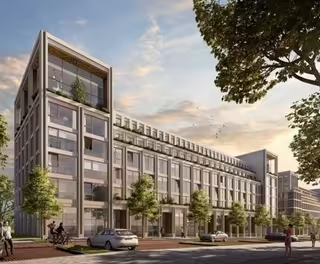
Utrecht's station area has undergone the largest inner-city transformation in the Netherlands over the past fifteen years. Where there was once a messy no-man's-land between the station and the Jaarbeurs exhibition center, there are now residential towers, offices, and a renovated Hoog Catharijne shopping center. Wonderwoods, the green residential towers with trees on their facades, is the most photographed building. On the east side of the station, Smakkelaarspark is being developed: three residential buildings around a new city park.
The apartments in the station area are new construction in the purest sense: sleek layouts, underfloor heating, large windows, communal roof terraces. The target group is urban: people who see the station as an extension of their front door. Rental prices are commensurate. But for those who take the train daily to Amsterdam, The Hague, or Rotterdam, there is no location in the Netherlands that is more conveniently located.
Apartments Price Breakdown in Utrecht
| Bedrooms | Average | Median | Price Range | Available |
|---|---|---|---|---|
€837 | €775 | €653 - €1,199 | 17 | |
€1,710 | €1,600 | €825 - €3,000 | 59 | |
€2,144 | €2,100 | €1,221 - €3,795 | 60 | |
€2,227 | €2,038 | €1,650 - €2,900 | 10 |
Kanaleneiland: Post-War Flats with a New Energy Label
Kanaleneiland was built between 1955 and 1971, during the years of great housing shortages. Gallery flats, strip development. The urban plan was ambitious for its time: a coherent design with much air and light between the blocks. In practice, the neighborhood aged faster than planned.
Over the past ten years, that has been changing. Hundreds of flats have been renovated structurally, with new facades that lifted the energy label from F to A. Courtyards have been redesigned. In blocks 4 and 5, 235 new apartments have been built. The neighborhood received European subsidies for sustainability. Kanaleneiland is not hip and won't be for a while. But it offers something that the city center and Lombok cannot: independent apartments at the lowest rental prices in Utrecht, in a neighborhood that will look better in five years than it does today.
Merwedekanaalzone: The Neighborhood That Doesn't Yet Exist
South of the city center, along the Merwedekanaal, lies a former industrial area being transformed into a completely new urban district. The plans are ambitious: about 10,000 homes, mostly apartments, in a car-free neighborhood with shared facilities and much greenery. The first projects are under construction. The entire area will be delivered in phases until the 2030s.
For those looking for an apartment now, the Merwedekanaalzone is not yet an option. But for those who want to stay in Utrecht in the coming years, it is relevant: this project will substantially increase the total supply in the city. Keep an eye on it.
Two Levels Along the Water
The Utrecht canals are the only ones in the world with wharves and wharf cellars at water level. 732 cellars, five kilometers of canal, a complete second street level that exists nowhere else. Cafes, studios, and living spaces are located in the cellars. It's why the Oudegracht feels different from any canal in Amsterdam.
Lombok as a Laboratory
Lombok proved that a deprived neighborhood can transform without losing its character. Kanaalstraat still has its Turkish bakers and Moroccan butchers, but now there are also coffee shops and concept stores. The new construction complexes Buenos Aires and Los Angeles added apartments without demolishing existing streets. It's gentrification in slow motion.
The Station as a Home Address
Utrecht Centraal handles more daily travelers than any other station in the Netherlands. The residential towers in the station area are built on that promise: get off, into the elevator, home. Wonderwoods, Smakkelaarspark, and the towers on the Jaarbeurs side are creating a completely new residential area in a place that was a construction site twenty years ago.
View Apartments in Utrecht
Set up a search with your preferences for neighborhood, area, and price range. Turn on notifications so you know immediately when something becomes available. With your documents ready, you can respond the same day.
View Apartments in Utrecht