Renting a House in The Hague
The Royal City has more homes than you think — if you know where to look.
The Hague is the only major city in the Netherlands where you can be on the beach within ten minutes of a 1920s villa. That sounds like an advertising brochure, but it’s the daily reality for residents of the Vogelwijk, Belgisch Park, and parts of Loosduinen. This combination of coast, administrative power, and an international community of tens of thousands of expats makes The Hague's rental market fundamentally different from Amsterdam or Rotterdam. Here, you compete not only with other Dutch people but also with diplomats, ICC employees, and NGO professionals who wield rental budgets that would shock the average home seeker.
Houses in The Hague
That doesn't make renting a home in The Hague impossible — it does mean you need to understand the city before you start looking. The Hague is built in layers. Each era has left behind a different type of house, in a different part of the city, for a different type of resident. Those who grasp this will search more effectively.
Three Eras, Three Types of House
The Hague does not have a uniform housing stock. The city was built in waves, and each wave left its own character, which you can still see today in the rental housing supply.
Pre-war & Stately
Villas and mansions from 1890–1940 in Benoordenhout, Vogelwijk, and Marlot. High ceilings, large gardens, Nieuwe Haagse School architecture.
Post-war & Spacious
Single-family homes from the sixties and seventies in Mariahoeve, Waldeck, and parts of Loosduinen. Practically laid out, lots of greenery, more affordable.
Vinex & Modern
New development areas like Wateringse Veld and Ypenburg, built from the late nineties onwards. Terraced houses and semi-detached homes around playgrounds and canals.
This three-way division not only determines what your house looks like but also what you pay, who your neighbors are, and how long you search. A detached house in Marlot where former Prime Minister Piet de Jong once lived plays in a completely different league than a through-lounge house in Waldeck-Zuid — and yet they are only a fifteen-minute bike ride apart.
The Villa Districts: Vogelwijk, Benoordenhout, and Marlot
Those specifically looking for a house with character will quickly find themselves in the handful of neighborhoods that give The Hague its reputation as a villa city.
The Vogelwijk was built in the 1920s and 1930s and feels like a village within the city. Short rows of detached and semi-detached houses with remarkably large gardens, quiet green streets, and the dunes of Westduinpark within walking distance. Residents do their shopping at Mezenplein or cycle to Fahrenheitstraat in five minutes. About ninety percent of the homes here are owner-occupied — if a rental house becomes available, it's gone within a day. Set up an alert if this neighborhood is on your list.
Benoordenhout has a different profile. The neighborhood was built between 1915 and 1959, with the Nassaubuurt as the oldest part (around 1890) and Duinzigt as the youngest (around 1970). Large single-family homes and semi-detached houses on wide avenues like Van Hoytemastraat and Weissenbruchstraat dominate the streetscape. The Haagse Bos and Clingendael estate are a stone's throw away. About thirty percent of the homes in Benoordenhout are private rentals — more than in the Vogelwijk — but the prices are among the highest in the city.
Marlot is a story apart. The municipality bought the estate in 1917 and commissioned architect Co Brandes to create a homogeneous villa district in the style of the Nieuwe Haagse School. The result is one of The Hague's most coherent architectural ensembles: wide streets, reflective ponds, and the Parkflat Marlot — a cross between a country house and an apartment building that became a national monument in 1993. Rental properties in Marlot rarely come on the market. Expect rental prices of €3,500 and higher for a detached house.


€1,650 / month


€2,495 / month
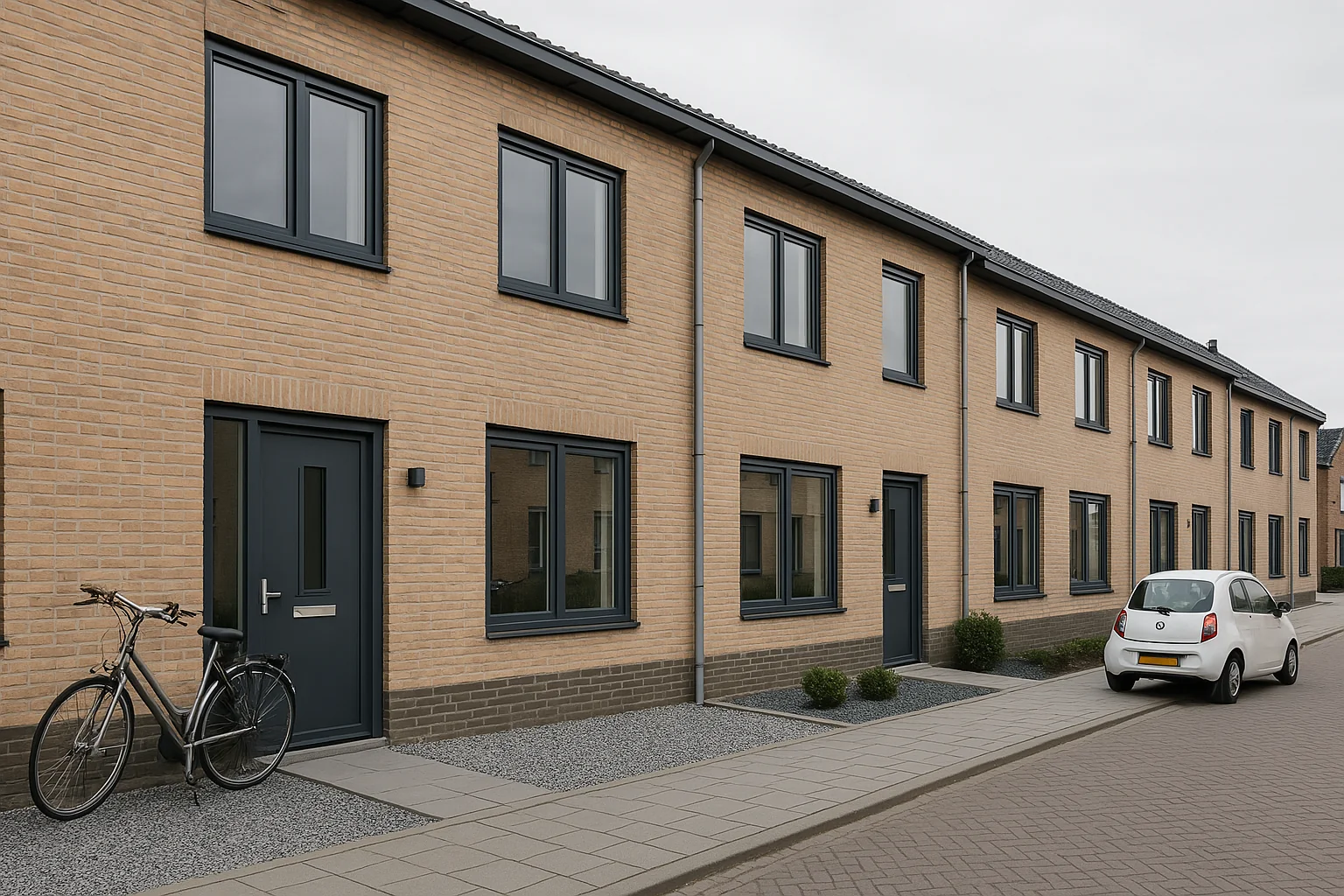
€1,550 / month


€3,250 / month


€1,023 / month


€350 / month
Where Families End Up: Ypenburg and Wateringse Veld
The Vinex areas of The Hague are built for a completely different audience than the villa districts, and you notice it immediately. No pre-war grandeur here, but modern efficiency: good insulation, practical layouts, and streets designed around play areas and water.
Ypenburg is built on the site of the former military airfield, which explains the striking spaciousness. Most homes are single-family houses. The Bosweide sub-neighborhood consists mainly of villas. Each sub-neighborhood — De Vissen, De Velden, De Lanen — has its own architectural character, which prevents the area from feeling like one big cookie-cutter factory. Ypenburg has its own NS station with direct connections, and via the A4, A12, and A13, you can be on the motorway within fifteen minutes.
Wateringse Veld is one of the largest Vinex locations in the Netherlands, and the name gives it away: water plays a role everywhere. Single-family homes are located around canals, on islands, and alongside parks. The average area of a rental house is around 120 m² — unusually spacious by Hague standards. Families with children form by far the largest group of residents. The Pirate Playground in Vlietpark is a local attraction, and Wateringen's village center is within cycling distance for daily groceries at specialty shops not found in the neighborhood itself.
The free sector supply in these neighborhoods is scarce. In Wateringse Veld, only about ten percent of the homes fall into the free rental sector. This means: react quickly when something appears online, and always have your documents — pay slips, employer's statement, ID — ready.
The Unexpected Option: Waldeck
Between the coast and the Vinex areas lies Waldeck, a neighborhood that rarely appears on lists but is interesting for renters. The homes date from the sixties, seventies, and eighties and are divided into sub-neighborhoods with their own unique character. Nieuw-Waldeck is a typical 'cauliflower' neighborhood with winding streets, courtyards, and lots of water. In Waldeck-Noord, there is a massive block of terraced houses at the corner of Laan van Meerdervoort and Ockenburghstraat, dubbed 'The Great Wall of China' by residents.
The charm of Waldeck lies in the combination of relatively affordable rent and direct proximity to nature. Ockenburg Estate, Madestein recreation park, and the De Uithof beach entrance are all within walking distance. For those looking for a house below the price level of the villa districts but not wanting the Vinex aesthetic, Waldeck is worth exploring.
What Rent Costs Here
The Hague's rental market has greater price differences than most cities. Between a terraced house in Wateringse Veld and a mansion in Benoordenhout, the difference can be as much as a factor of three or four. This range is good news if you are flexible about location — more is possible than the average rental price suggests.
Houses Price Breakdown in The Hague
| Bedrooms | Average | Median | Price Range | Available |
|---|---|---|---|---|
1 | €1,650 | €1,650 | €1,650 - €1,650 | 1 |
2 | €2,158 | €2,000 | €1,550 - €3,000 | 1 |
3 | €2,221 | €2,748 | €140 - €3,250 | 1 |
4+ | €3,476 | €3,263 | €1,320 - €5,500 | 2 |
Landlords in The Hague generally apply an income requirement of three to four times the basic rent. For the higher rents in neighborhoods like Benoordenhout and the Vogelwijk, this quickly means a household income of €7,000 gross per month or more. In the Vinex areas and Waldeck, these thresholds are lower.
The International Factor
No other Dutch city has such a large international employer base concentrated in one zone. Around five hundred international organizations — from the International Court of Justice and Europol to NGOs like UNICEF and Oxfam Novib — together generate some twenty thousand jobs. Add to that the embassies, consulates, and multinationals, and you understand why neighborhoods like Statenkwartier and Archipelbuurt are described as 'the international zone.'
For the rental market, this has a concrete effect: part of the housing supply in the higher segments is rented out with a diplomatic clause, which allows tenants to terminate the contract early in case of relocation. This means that in diplomatic neighborhoods, homes become unexpectedly available more often than elsewhere — precisely the type of houses that remain occupied for a long time in other cities. Keep an extra eye on the offerings in Statenkwartier, Benoordenhout, and around Laan van Meerdervoort if you are looking for a spacious house.
View Current Listings
The Hague has more rental homes than the headlines suggest. Filter by neighborhood, price, and housing type, and receive an alert as soon as something new comes online.
View rental homes in The Hague